Mechanical Menagerie Guide: An Overview
Step right up! This guide unveils the captivating world of mechanical marvels – automata brought to life, mirroring nature’s grace and strength, like a circus performance!
What is a Mechanical Menagerie?
A mechanical menagerie represents a fascinating collection of automata – self-operating machines designed to mimic the movements and behaviors of animals, both real and imagined. These aren’t simply robots; they are intricate works of art and engineering, often showcasing remarkable craftsmanship and ingenuity;
Think of a miniature, mechanical zoo, but instead of living creatures, you find exquisitely crafted, moving sculptures. These creations range from simple, charming figures to incredibly complex devices capable of performing elaborate routines, much like the acrobats and strongmen of a vibrant circus.
The term “menagerie” itself evokes a sense of wonder and exotic display, and a mechanical one amplifies this with the added element of human creation. It’s a testament to our enduring fascination with replicating life and pushing the boundaries of what’s mechanically possible, blending artistry with technical skill.
Historical Roots of Automata & Mechanical Creatures
The desire to create artificial life stretches back millennia. Ancient civilizations, including the Greeks and Egyptians, documented self-operating devices and mechanical statues, often linked to religious practices or theatrical performances. These early examples, though rudimentary by today’s standards, demonstrate a foundational fascination with mimicking life through mechanics.
Throughout history, automata weren’t merely toys; they were often symbols of power, ingenuity, and even divine creation. The concept evolved alongside advancements in engineering and clockmaking, with increasingly sophisticated mechanisms enabling more realistic movements.

This historical thread connects directly to the modern mechanical menagerie, representing a continuation of humanity’s age-old ambition – to build machines that not only function but also entertain and inspire awe, much like the spectacle of a traveling circus.

Early Examples & Pioneers
Visionaries emerged! Da Vinci and Al-Jazari, centuries apart, pioneered intricate mechanical designs, laying the groundwork for future automata and inspiring generations of inventors.
Leonardo da Vinci’s Mechanical Lion
A regal creation! Around 1500, Leonardo da Vinci designed a mechanical lion capable of walking and opening its chest to reveal a bouquet of lilies – a symbol of Florence. Though the original automaton hasn’t survived, detailed drawings and reconstructions reveal Da Vinci’s ingenious engineering prowess.
This wasn’t merely a display of technical skill; it was a sophisticated political statement, presented as a gift to the King of France. The lion’s ability to perform these actions demonstrated a mastery of mechanics, utilizing a complex system of gears, pulleys, and potentially, springs. Da Vinci’s design showcased his deep understanding of anatomy, attempting to replicate the natural gait of a lion.
The lion represents an early, ambitious attempt at biomimicry – recreating life through mechanical means. It foreshadowed the elaborate automata that would flourish in later centuries, proving Da Vinci’s enduring legacy extended far beyond painting and sculpture, into the realm of mechanical artistry.
Al-Jazari’s Automata (12th Century)
A pioneering inventor! Ismail al-Jazari, a polymath from the 12th century, stands as a crucial figure in the history of automata. His Book of Knowledgeable Ingenious Mechanical Devices details numerous self-operating machines, far exceeding previous mechanical creations. These weren’t simple toys, but practical devices and elaborate entertainment.
Al-Jazari’s automata included a musical robot band, a hand-washing automaton, and a programmable drum machine – demonstrating a remarkable understanding of mechanics and control systems. He employed ingenious mechanisms like camshafts and cranks to create lifelike movements. His work significantly advanced the field, utilizing water power and complex gearing.
Importantly, Al-Jazari’s designs weren’t limited to imitation; they solved real-world problems. His automata represent a golden age of Islamic engineering, influencing mechanical development for centuries and laying groundwork for future innovations in robotics and automated systems.

The 18th & 19th Century Golden Age
A flourish of ingenuity! This era witnessed an explosion of automata creation, fueled by skilled artisans and a public captivated by mechanical wonders and artistry.
Jacques de Vaucanson & His Duck
A marvel of engineering! Jacques de Vaucanson, an 18th-century French inventor, achieved lasting fame with his incredibly realistic mechanical duck. Unveiled in 1739, this automaton wasn’t merely a static display; it could flap its wings, quack, drink water, digest grain, and even defecate – a truly astonishing feat for the time!
The duck’s internal mechanisms were complex and cleverly concealed within its metallic “skin.” Vaucanson meticulously studied avian anatomy to replicate the natural movements of a duck. It featured a complex system of cams, levers, and valves to simulate digestion, and a bellows system to power the wing movements.
While often described as a digestive system, modern analysis suggests the “digestion” was a clever illusion, with pre-loaded food appearing to be processed. Regardless, the duck captivated audiences, including royalty, and cemented Vaucanson’s reputation as a master automaton maker. It remains a pivotal example of pre-industrial robotics.
The Jaquet-Droz Automata
A family legacy of artistry! Pierre Jaquet-Droz, a Swiss watchmaker, and his son Henri-Louis, created a series of breathtakingly intricate automata in the 18th century. These weren’t simple mechanical toys; they were complex, self-operating machines designed to showcase exceptional craftsmanship and ingenuity.
The most famous creations include “The Writer,” “The Draughtsman,” and “The Musician.” The Writer could write letters and poems using a quill pen, guided by a complex series of cams and levers. The Draughtsman could draw remarkably detailed pictures, and The Musician played the harpsichord with lifelike precision.
These automata weren’t just demonstrations of mechanical skill; they were intended to be artistic statements. The Jaquet-Droz family toured Europe exhibiting their creations, captivating audiences with their seemingly magical abilities. Today, these automata are treasured artifacts, representing a pinnacle of pre-industrial mechanical engineering and artistic expression.
Maillardet’s Automaton Draughtsman
A marvel of miniaturization and artistry! Created by Henri Maillardet, a Swiss mechanical engineer, around 1805, the Automaton Draughtsman is a truly remarkable piece of automata. This life-sized automaton, depicting a young artist, could create incredibly detailed drawings – portraits, landscapes, and even write poems – all autonomously.
The secret lay within its intricate clockwork mechanism, housed within the automaton’s body. A complex system of cams, gears, and levers controlled the movement of the hand, guiding the pencil across the paper. The automaton could even change colors and respond to pre-programmed instructions.
What set Maillardet’s creation apart was its ability to seemingly think and create. It wasn’t simply replicating a pre-defined pattern; it possessed a degree of programmed variability. This automaton captivated audiences and remains a testament to the ingenuity of 19th-century mechanical engineering.
Modern Mechanical Menageries & Art
Today’s artists blend tradition with technology, crafting robotic creatures for entertainment and artistic expression, echoing the wonder of historical automata and circus acts!
Contemporary Automata Artists
The art of automata isn’t lost to history; it thrives today thanks to dedicated contemporary artists. These creators push the boundaries of mechanical sculpture, often blending traditional techniques with modern materials and engineering. Artists like Paul Spooner are renowned for his whimsical and often satirical automata, featuring intricate movements and charming characters. His work frequently explores themes of human behavior and the natural world.
Another notable figure is Keith Newstead, whose automata are celebrated for their elegance and precision. Newstead’s pieces often incorporate delicate mechanisms and captivating visual effects. These modern masters don’t simply replicate past designs; they innovate, experimenting with new forms of motion and expression. They frequently exhibit their work in galleries and at automata shows, fostering a growing community of enthusiasts and collectors; Their creations, much like a captivating circus performance, offer a unique blend of artistry and engineering, continuing the legacy of mechanical menageries for a new generation.
Robotic Animals in Entertainment (Disney, etc.)
The influence of mechanical menageries extends far beyond art galleries and into the realm of entertainment, particularly within theme parks and film. Disney, a pioneer in animatronics, has long utilized robotic animals to create immersive experiences. From the jungle cruise’s hippos and elephants to the pirates’ parrots and dogs, these automated creatures bring stories to life with remarkable realism.
These aren’t simply static displays; they’re sophisticated machines programmed with complex movements and synchronized audio. The development of these animatronic animals required significant advancements in robotics, hydraulics, and control systems. Beyond Disney, robotic animals appear in films and stage productions, offering a compelling alternative to live animals or CGI. Like a dazzling circus act, these creations captivate audiences, blurring the lines between reality and illusion, and demonstrating the enduring appeal of bringing mechanical life to the animal kingdom.
Materials & Mechanisms
Intricate gears and clever design! Building these wonders demands brass, steel, wood, and modern polymers, powered by ingenious systems – a true mechanical ballet!

Clockwork Mechanisms
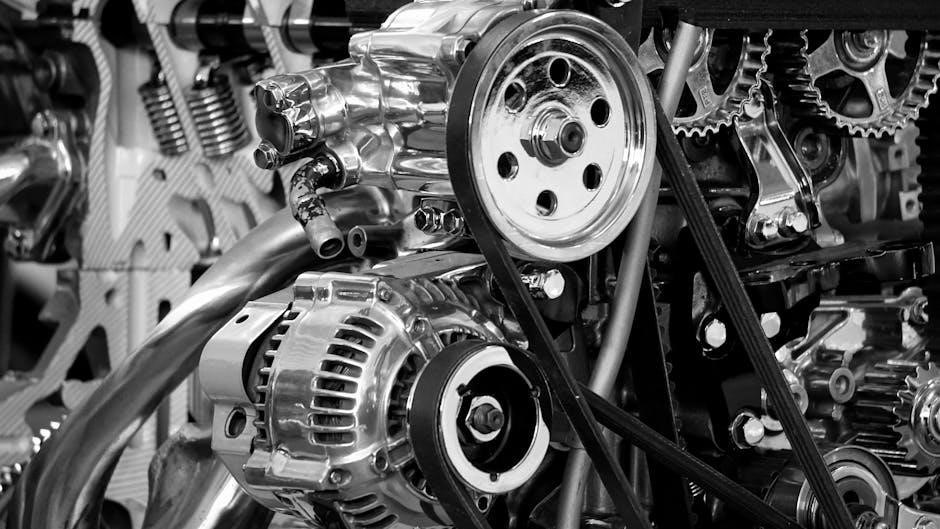
The heart of many automata lies within the delicate dance of clockwork. This ancient technology, refined over centuries, utilizes precisely crafted gears, springs, and escapements to translate stored energy into controlled motion. Imagine a tightly coiled mainspring slowly releasing its power, driving a series of gears that orchestrate a bird’s wing flap or a lion’s head turn.
The beauty of clockwork resides in its mechanical simplicity and reliability. Unlike modern electronics, it requires no electricity, relying solely on the principles of physics. Different gear ratios dictate speed and torque, allowing artisans to create a wide range of movements – from rapid, jerky actions to slow, graceful gestures.
Fusees, conical pulleys, were often employed to maintain consistent torque as the mainspring unwound, ensuring smooth operation throughout its duration. Clockwork wasn’t merely about movement; it was about programmed movement, a precursor to modern computing. These mechanisms allowed for complex sequences of actions, bringing these mechanical creatures to life with astonishing realism.
Cam & Follower Systems
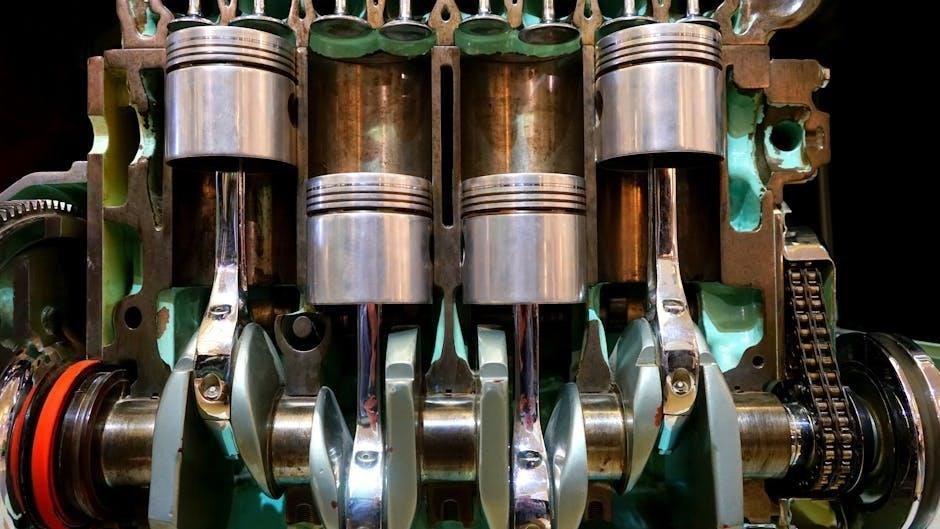
Beyond gears, cam and follower systems represent another cornerstone of mechanical movement. A cam, a rotating or sliding piece with an irregular shape, dictates motion through its contact with a follower – a component that rides along the cam’s surface. This interaction translates rotational motion into linear or oscillating movement, perfect for replicating natural actions.
Think of a cam shaped like an egg; as it rotates, a follower tracing its contour will move up and down, mimicking a leg lifting or a head nodding. Varying cam profiles allow for incredibly nuanced control over the timing, speed, and extent of the movement. These systems were frequently used to create repetitive actions, like the flapping of wings or the pumping of a mechanical heart.

The simplicity and robustness of cam and follower mechanisms made them ideal for automata, offering a reliable way to generate complex, pre-programmed motions. They were often combined with clockwork, leveraging the consistent power source with the precise control of the cam.
Pneumatics & Hydraulics in Automata
While clockwork provided the initial power, pneumatics and hydraulics offered exciting possibilities for more dynamic and life-like automata. Utilizing compressed air (pneumatics) or pressurized fluids (hydraulics), these systems could generate significant force and create smoother, more fluid movements than purely mechanical means.
Imagine a mechanical bird taking flight – hydraulics could power the wing movements with a realism impossible to achieve with gears alone. Similarly, pneumatics could inflate and deflate bellows to simulate breathing or power a mechanical musician’s fingers across a miniature keyboard. These systems allowed for more complex and varied motions, moving beyond simple repetition.
However, implementing pneumatics and hydraulics presented challenges. Maintaining airtight seals and controlling fluid flow required precision engineering. Despite these hurdles, their ability to mimic muscle-like actions made them invaluable tools for ambitious automaton creators seeking to push the boundaries of realism.
The Future of Mechanical Menageries
The future beckons! AI and biomimicry will converge, crafting robotic animals with astonishing realism, blurring the lines between machine and living creature.
AI & Machine Learning Integration
The dawn of intelligent automata is upon us! Integrating Artificial Intelligence (AI) and Machine Learning (ML) into mechanical menageries represents a paradigm shift, moving beyond pre-programmed movements to truly responsive and adaptive creations. Imagine robotic creatures that learn from their environment, exhibiting nuanced behaviors and even displaying a semblance of personality.
ML algorithms can analyze vast datasets of animal movements, allowing automata to replicate gaits, postures, and interactions with remarkable accuracy. AI enables these creations to react to stimuli – sound, light, touch – in a dynamic and unpredictable manner, fostering a sense of genuine life. This isn’t simply about mimicking; it’s about creating interactive experiences.
Furthermore, AI-powered systems can facilitate self-diagnosis and repair, extending the lifespan and reducing the maintenance requirements of these complex machines. The potential for collaborative creation, where artists and AI algorithms work in tandem, opens exciting new avenues for artistic expression and technological innovation within the realm of mechanical menageries.
Biomimicry & Realistic Robotic Animals
Nature’s blueprint inspires the future of automata! Biomimicry, the practice of emulating nature’s designs and processes, is driving a revolution in robotic animal creation. Contemporary mechanical menageries increasingly prioritize realism, striving to replicate not just appearance, but also the intricate biomechanics of living creatures.
Advanced materials – flexible polymers, lightweight alloys, and bio-compatible composites – allow for the construction of incredibly lifelike forms. Engineers meticulously study animal anatomy, muscle structure, and skeletal systems to recreate fluid movements and natural gaits. This extends beyond aesthetics; it’s about functional accuracy.
The goal isn’t merely to build robots shaped like animals, but to engineer machines that move and behave like them. This pursuit demands a deep understanding of animal physiology and a commitment to pushing the boundaries of mechanical engineering, resulting in breathtakingly realistic robotic companions and exhibits.