
Master Forge Wood Stove Manual PDF: A Comprehensive Guide
Navigating Master Forge pellet stove intricacies often begins with accessing the correct manual. Finding a PDF version streamlines troubleshooting,
maintenance, and understanding advanced settings like the factory menu accessed via code 1088. Resources range from official websites to dedicated online forums.
Understanding Master Forge Stoves
Master Forge stoves, frequently encountered as pellet stoves, represent a popular choice for supplemental heating, blending affordability with effective warmth. However, their operation and customization can present challenges, particularly for those unfamiliar with pellet stove technology. A core aspect of mastering these stoves lies in understanding their control systems and the hidden functionalities accessible through the user and factory menus.
Many users discover that accessing advanced settings, like those within the factory menu, requires a specific code – commonly reported as “1088” – highlighting a degree of intentional obscurity from the importer. While the standard user panel, activated by holding the wrench button, offers essential controls, the factory menu unlocks a wider range of adjustments.
Furthermore, maintaining optimal performance necessitates understanding component-specific parts. Items like stainless steel heat distribution plates (measuring 15-3/4″ x 5-3/8″) and 7-round pellet stove blower gaskets are crucial for efficient operation and are readily available through specialized retailers. Successfully navigating these aspects relies heavily on a comprehensive understanding, often best obtained through the official manual or community resources like r/PelletStoveTalk on Reddit.
What is a Master Forge Wood Stove?
Master Forge stoves are primarily recognized as pellet stoves, offering a convenient and efficient alternative to traditional wood-burning systems. These stoves utilize compressed wood or biomass pellets as fuel, automatically feeding them into a burn pot to generate heat. While often marketed under the Master Forge brand, many models are also associated with Cleveland Iron, indicating a common manufacturing origin or distribution network.
Unlike traditional wood stoves requiring manual fuel loading, Master Forge pellet stoves feature automated systems controlled via a digital panel. This panel allows users to adjust heat output, fan speed, and other settings. However, unlocking the full potential of these stoves often requires accessing hidden menus, like the factory menu, typically activated with a code such as “1088”.

Components like stainless steel heat distribution plates and blower gaskets are integral to their operation, ensuring efficient heat transfer and airflow. Finding a detailed manual, often in PDF format, is crucial for understanding these systems, troubleshooting issues, and performing necessary maintenance. Resources like GrillPartsReplacement offer replacement parts and further insights into stove functionality.
Common Master Forge Stove Models
Identifying specific Master Forge stove models is key when searching for the correct manual or replacement parts. The H140XL is a frequently referenced model, often discussed in online forums like r/PelletStoveTalk, where users share experiences and troubleshooting tips. However, Master Forge offers a range of pellet stoves with varying BTU outputs and features.
Many models share common components, such as the 7-round pellet stove blower gasket, making it a readily available replacement part. Understanding the specific model number is vital when ordering parts from retailers like GrillPartsReplacement, ensuring compatibility. The design often incorporates vented heat distribution plates, measuring approximately 15-3/4″ x 5-3/8″, crucial for efficient heat dispersal.
Accessing the user panel, often via a wrench button, allows for basic operational control. More advanced settings, including those within the factory menu (accessed with codes like 1088), require a deeper understanding of the stove’s programming. A comprehensive PDF manual is invaluable for navigating these features and optimizing performance across all Master Forge models.
Locating the Master Forge Wood Stove Manual PDF
Finding a Master Forge wood stove manual PDF can sometimes prove challenging, as official documentation isn’t always readily available. A primary starting point is the Official Master Forge Website, though direct PDF downloads aren’t consistently offered. Users often resort to Third-Party Manual Databases, exercising caution regarding the source’s reliability and the manual’s applicability to their specific model.
Online communities, such as the r/PelletStoveTalk subreddit, frequently serve as valuable resources. Members often share links to manuals or offer guidance on locating them. Searching using the precise model number (e.g., H140XL) significantly improves search results; GrillPartsReplacement and similar retailers may also host manuals for models they support.
Remember to verify the manual’s version and compatibility with your stove. The factory menu, accessible via codes like 1088, requires accurate instructions found within the correct manual. Prioritize official sources whenever possible to ensure accurate information regarding safety precautions, maintenance schedules, and troubleshooting procedures.
Official Master Forge Website
Navigating the official Master Forge website is the logical first step in seeking a manual PDF, however, direct access isn’t always straightforward. While the site extensively catalogs their grilling products – burners, grates, and radiant components – dedicated sections for pellet stove documentation are often limited or absent. Users frequently encounter difficulty locating specific manuals for older or less common models.
The website primarily focuses on replacement parts, like stainless steel heat distribution plates (15-3/4″ x 5-3/8″) and blower gaskets (7-round), rather than comprehensive user guides. Searching the site using precise model numbers can sometimes yield relevant results, but often leads to parts diagrams instead of complete manuals.
Despite these challenges, periodically checking the official website remains advisable, as documentation availability can change. It’s also worth exploring any support or FAQ sections, which might contain helpful information or links to downloadable resources. Remember to cross-reference any found information with other sources to ensure accuracy.
Third-Party Manual Databases
When the official Master Forge website proves insufficient, numerous third-party manual databases emerge as valuable resources for locating a PDF version of your wood stove manual. These platforms aggregate documentation from various manufacturers, offering a broader search scope than a single brand’s website. However, verifying the accuracy and completeness of documents found on these sites is crucial.
Online forums, like r/PelletStoveTalk on Reddit, often host user-shared manuals and troubleshooting tips. These communities can be incredibly helpful, particularly for models where official documentation is scarce. Reddit users have specifically noted the usefulness of the “1088” code for accessing factory settings on newer Master Forge stoves.
Dedicated manual repository websites also exist, though their coverage of Master Forge stoves may vary. Always exercise caution when downloading files from unfamiliar sources and scan for potential malware. Cross-referencing information with multiple sources enhances reliability and ensures you have the correct manual for your specific model.
Troubleshooting Common Issues
Accessing the Master Forge wood stove manual PDF is paramount when encountering operational difficulties. Common problems include ignition failures, reduced heat output, and perplexing error codes. The manual provides diagnostic steps and potential solutions for each issue, often guiding users through a process of elimination.
Pellet feed problems are frequently reported, potentially stemming from auger malfunctions or sensor errors. The manual details how to inspect and, in some cases, reset these components. Understanding the control panel, including accessing the user panel via the wrench button, is vital for adjusting settings and interpreting error messages.
More advanced troubleshooting may involve navigating the factory menu, often unlocked with the code “1088” as discussed in online forums like r/PelletStoveTalk. However, altering factory settings requires caution, as incorrect adjustments can negatively impact performance. Always consult the manual before making changes.
Stove Not Igniting
When your Master Forge pellet stove fails to ignite, the manual PDF becomes an invaluable resource. Initial troubleshooting steps, detailed within, involve verifying pellet levels and ensuring the auger is functioning correctly. A lack of pellets or an obstructed auger are frequent culprits.
The manual will guide you through checking the igniter itself – is it glowing? If not, a faulty igniter or a wiring issue may be present. It also outlines procedures for inspecting the flame sensor, which confirms ignition and sustains the pellet feed. A dirty or malfunctioning sensor can prevent startup.
Furthermore, the manual emphasizes the importance of proper venting and airflow. Obstructions in the vent pipe can lead to insufficient oxygen for combustion. Referencing the manual’s diagrams ensures correct component placement and operation. Remember to consult the manual before attempting any repairs or adjustments.
Low Heat Output
Experiencing reduced heat from your Master Forge pellet stove? The manual PDF provides systematic troubleshooting steps. Begin by verifying pellet quality; damp or degraded pellets burn inefficiently. The manual details optimal pellet specifications for peak performance.
Next, inspect the burner components. A clogged burner or damaged heat distribution plates (measuring 15-3/4″ x 5-3/8″) can significantly reduce heat output. The manual includes diagrams illustrating proper component placement and cleaning procedures. Ensure the stainless steel heat distribution plates aren’t obstructed.
Furthermore, the manual emphasizes the importance of regular cleaning. Ash buildup restricts airflow, hindering combustion. It also guides you through accessing and adjusting settings within the user panel (accessed via the wrench button) to optimize burn rates. Finally, confirm the blower is functioning correctly, as it distributes heated air throughout the room.
Error Codes and Their Meanings
Decoding error messages is crucial for effective Master Forge pellet stove maintenance, and the manual PDF is your primary resource. These codes signal specific malfunctions, enabling targeted repairs. The manual meticulously lists each code, providing a clear explanation of the underlying issue and recommended solutions.
Common errors might relate to pellet feed problems, indicating a blockage in the auger or hopper. Others could point to issues with the blower motor, temperature sensors, or exhaust venting. The manual details how to access diagnostic information through the control panel, including the factory menu (often accessed with code 1088).
Understanding these codes prevents unnecessary service calls and empowers owners to perform basic troubleshooting. Remember to consult the manual before attempting any repairs, prioritizing safety and proper procedure. Ignoring error codes can lead to further damage or hazardous operating conditions.
Pellet Feed Problems
Addressing pellet feed issues is a frequent concern for Master Forge stove owners, and the manual PDF offers invaluable guidance. Problems can range from a complete lack of pellet delivery to inconsistent or insufficient fuel reaching the burn pot. The manual details the entire fuel delivery system, from the hopper to the auger and burn pot.
Common causes include clogged augers due to moisture or debris, a jammed auger motor, or a blocked fuel line. The manual provides step-by-step instructions for clearing obstructions and inspecting components. It also highlights the importance of using dry, high-quality pellets to prevent clumping and feed issues.
Troubleshooting often involves checking the hopper for bridging, ensuring the auger rotates freely, and verifying the correct settings within the control panel. The manual may reference factory menu adjustments (accessed via code 1088) that influence feed rates. Always disconnect power before inspecting internal components.
Understanding the Control Panel
The Master Forge pellet stove control panel is the central hub for operation and customization, and the manual PDF is crucial for deciphering its functions. It allows users to adjust heat output, fan speed, and operating schedules. Familiarity with the panel’s layout and button functions is essential for efficient stove management.
The manual details each button’s purpose, including the power button, mode selection, and the often-utilized “wrench” button for accessing the user panel. This user panel provides access to more advanced settings, allowing for fine-tuning of stove performance. Understanding these settings is key to optimizing heat distribution and fuel efficiency.
Furthermore, the manual explains how to interpret displayed information, such as temperature readings and error codes. It also outlines the procedure for accessing the factory menu, often requiring a specific code like 1088, which unlocks even deeper customization options. Careful review of the manual is advised before altering factory settings.
Accessing the User Panel (Wrench Button)
The Master Forge pellet stove’s user panel, a powerful tool for customization, is accessed by pressing and holding the wrench button on the control panel. This action unlocks a menu offering adjustments beyond the standard operating settings, allowing users to tailor the stove’s performance to their specific needs and preferences. The manual PDF provides detailed instructions on this process, emphasizing the importance of understanding each setting before modification.
Within the user panel, you can typically adjust parameters like feed rate, burn pot size, and fan speed. These adjustments impact heat output, fuel consumption, and overall stove efficiency. The manual clarifies the effect of each setting, helping users achieve optimal performance. It’s crucial to note changes carefully, as incorrect settings can negatively affect stove operation.
Reddit discussions highlight the user panel’s accessibility and usefulness, even for those initially lost with the stove’s controls. However, the manual strongly advises caution when exploring the factory menu (accessed separately), as improper adjustments there can lead to significant issues.
Factory Menu Settings (Code 1088)
Accessing the factory menu on a Master Forge pellet stove requires entering the code “1088”. This unlocks advanced settings intended for technicians, but often explored by experienced users seeking greater control. However, the manual PDF strongly cautions against altering these settings without a thorough understanding of their function, as incorrect adjustments can severely impact stove performance and potentially void warranties.
Within the factory menu, parameters like auger speed, draft settings, and high/low feed rates can be modified. These settings influence combustion efficiency, pellet consumption, and overall heat output. Online forums, like r/PelletStoveTalk on Reddit, reveal that “1088” often works for both sets of factory settings on newer models, though this isn’t universally guaranteed.
The manual emphasizes that the factory menu is a “big secret” from the importer, implying a degree of risk associated with its use. While offering customization options, it also presents opportunities for making “bad choices” that could necessitate professional repair. Proceed with extreme caution and consult the manual frequently.
Adjusting Stove Settings
Master Forge pellet stoves offer adjustable settings accessible through both the user panel (activated by holding the wrench button) and, with caution, the factory menu (code 1088). The user panel allows for straightforward modifications to heat output, fan speed, and runtime schedules, catering to immediate comfort preferences. These adjustments are generally safe for most users and are well-documented in the stove’s manual PDF.
However, fine-tuning performance often requires understanding the interplay between these settings. Increasing the feed rate, for example, boosts heat but also accelerates pellet consumption. Conversely, lowering the fan speed can improve heat distribution but may lead to smoke buildup if not carefully monitored.
The manual PDF advises referencing troubleshooting sections when experiencing issues after adjustments. Remember, significant changes should be made incrementally, observing the stove’s response before proceeding further. Online communities, like Reddit’s r/PelletStoveTalk, provide valuable insights from experienced owners regarding optimal settings for various conditions.
Replacement Parts and Accessories
Maintaining a Master Forge pellet stove often necessitates replacing worn components. Common replacements include the 7-round pellet stove blower gasket, crucial for maintaining efficient airflow and combustion, and stainless steel heat distribution plates (measuring 15-3/4″ x 5-3/8″), which ensure even heat dispersal. Finding these parts is simplified by referencing the stove’s manual PDF, which often lists part numbers.
Several online retailers, such as GrillPartsReplacement and Master Forge Grill Parts, specialize in providing these components. Burner components are also available, though identifying the correct part requires careful comparison with the manual’s diagrams.
When sourcing replacements, prioritize quality to ensure compatibility and longevity. The manual PDF can guide you through the installation process, but consulting online forums or professional technicians is advisable for complex repairs. Regularly checking and replacing these parts contributes to optimal stove performance and safety.
Stainless Steel Heat Distribution Plates (15-3/4″ x 5-3/8″)
These vented stainless steel heat distribution plates, precisely measuring 15-3/4 inches in length and 5-3/8 inches in width, are vital components for Master Forge pellet stoves. Their primary function is to evenly distribute heat across the cooking surface, enhancing efficiency and preventing hot spots. Each plate features mounting tabs at each corner for secure installation and four slotted vents – two on each side – to facilitate optimal airflow.

Sourcing these plates is readily achievable through retailers like Master Forge Grill Parts, ensuring a direct fit for a variety of Master Forge models. Consulting your stove’s manual PDF is recommended to confirm compatibility and proper placement.
Regular inspection of these plates is crucial; warping or damage can significantly impact stove performance. Replacing a damaged plate restores even heat distribution, contributing to consistent cooking results and extending the lifespan of other burner components.
7-Round Pellet Stove Blower Gaskets
The standard 7-round pellet stove blower gasket is a frequently replaced part, essential for maintaining optimal combustion and efficiency in your Master Forge unit. These gaskets create a tight seal between the blower housing and the stove body, preventing exhaust gases from escaping and ensuring proper airflow for consistent heating.
Available through specialized retailers like GrillPartsReplacement, these gaskets are designed to fit a wide range of pellet stove makes and models, including many Master Forge stoves. Proper installation is key; a compromised seal can lead to reduced heating performance and potential safety hazards.
Referencing your Master Forge wood stove manual PDF will confirm the correct gasket size and installation procedure for your specific model. Regularly inspecting and replacing worn or damaged gaskets is a simple maintenance step that significantly contributes to the longevity and safe operation of your pellet stove.
Burner Components
Understanding the burner components within your Master Forge pellet stove is crucial for effective troubleshooting and maintenance, information readily available within the official manual PDF. The burner system is the heart of the stove, responsible for igniting and sustaining the pellet fuel combustion. Key components include the burner itself, the igniter, and the associated heat distribution plates.
These plates, often stainless steel and measuring 15-3/4″ x 5-3/8″, are vital for evenly distributing heat throughout the firebox, maximizing efficiency and preventing localized overheating. Grill parts retailers offer replacements for these vented heat distribution plates, ensuring optimal performance.
The manual PDF details the proper function and potential failure points of each burner component. Regular inspection for wear and tear, along with cleaning to remove ash buildup, will prolong the life of these parts and maintain consistent heating output. Always consult the manual before attempting any repairs or replacements.
Maintenance and Cleaning
Consistent maintenance and cleaning are paramount for the longevity and efficient operation of your Master Forge pellet stove, details comprehensively outlined in the official manual PDF. A regular cleaning schedule prevents ash buildup, ensures proper airflow, and minimizes the risk of malfunctions. The manual will specify recommended intervals for various cleaning tasks.
Essential maintenance includes emptying the ash pan frequently, cleaning the burn pot, and inspecting the venting system for obstructions. Replacing components like the 7-round pellet stove blower gasket, a standard size fitting many models, contributes to airtight seals and optimal combustion;
The manual PDF emphasizes safety precautions during cleaning, such as ensuring the stove is completely cool before handling components. Following these guidelines not only maintains performance but also safeguards against potential hazards. Proactive maintenance, guided by the manual, translates to years of reliable heating.

Regular Cleaning Schedule
The Master Forge wood stove manual PDF details a crucial cleaning schedule for optimal performance and safety. Daily, ash pan removal is recommended to prevent buildup and maintain efficient combustion. Weekly, inspect the burn pot for residue and clean as needed, ensuring proper pellet flow. Monthly, a thorough cleaning of the heat exchanger is vital; this involves removing and vacuuming accumulated ash and debris.

Seasonally, before the heating season begins, a comprehensive inspection of all components is advised. This includes checking the venting system for obstructions, replacing worn gaskets (like the 7-round blower gasket), and verifying the functionality of the blower motor. The manual emphasizes the importance of using appropriate tools and following safety guidelines.
Regularly cleaning or replacing the stainless steel heat distribution plates (15-3/4″ x 5-3/8″) ensures even heat distribution. Adhering to this schedule, as outlined in the PDF, maximizes efficiency and extends the stove’s lifespan.
Safety Precautions
The Master Forge wood stove manual PDF prominently features critical safety precautions. Always ensure proper ventilation, installing a carbon monoxide detector nearby is strongly advised. Never store flammable materials near the stove, maintaining a safe clearance of at least three feet. Regularly inspect the venting system for leaks or obstructions, as improper venting poses a severe hazard.
When accessing the factory menu (using code 1088) or adjusting settings via the user panel (wrench button), exercise caution. Incorrect adjustments can compromise safety and efficiency. Disconnect power before performing any maintenance or cleaning procedures. Avoid touching hot surfaces during or immediately after operation.
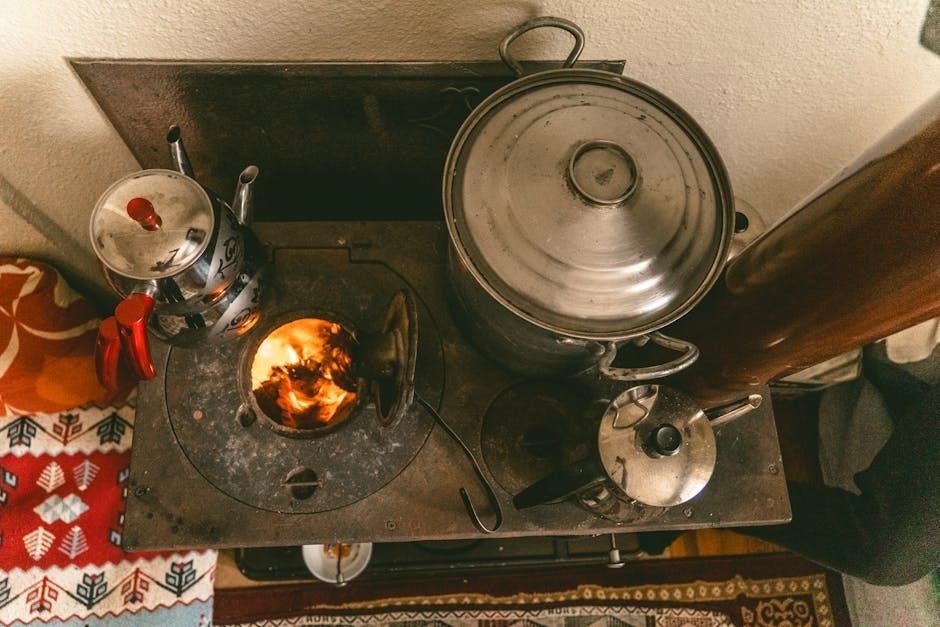
The manual warns against modifying the stove in any way, as this could void warranties and create unsafe conditions. Proper handling of ash is essential; allow it to cool completely before disposal in a metal container. Familiarize yourself with emergency procedures outlined in the PDF.